eader
Showing posts with label preventive health care. Show all posts

Thursday, February 6, 2014

Five Flu Survival Tips for the Chronically Ill

Fourteen days ago I got the flu from my husband.  Seems the virus has invaded his workplace and many of his co-workers are sick too.  Of course, instead of staying home and taking care of themselves, some of his co-workers continue to go to work and spread the flu to others! 

I know it was serious this year because my husband actually took sick time and stayed home. 

Unfortunately for me, it it pretty much impossible to avoid getting sick when you live with someone who has the flu. 

Tip #1: Get a flu shot


Yes, I did get a flu shot this year.  Personally, I am thankful that I did, because here in California, this year's flu outbreak is serious.  The flu has killed almost 200 people this year in my state and is hitting the 18 to 49 year old age group the hardest.

In the past, I have debated over whether to get the flu shot or not.  My reluctance stemmed from a flu shot I got back in 2007 which resulted in a massive migraine headache about an hour or so afterwards.  Looking back, I think the real source of the headache was that the injection was made into a trigger point, which aggravated it and caused the headache.  Now I ask the nurse to poke around first and select a site that isn't too painful.  This strategy has prevented a repeat post-flu shot headache.

Talk to your doctor about the pros and cons of getting a flu shot.  Because if you have pre-existing medical conditions like me, getting the flu can be serious, even life-threatening. 

Even with the shot, you can still get the flu like I did this year.  But I believe getting a flu shot this year prevented me from developing a more serious case of the flu and helped me avoid flu-related complications and hospitalization.

Tip #2: Get your family flu shots too


This year, my hubby had a "light bulb" moment.  "I should get the flu shot too, should I?" he said to me.  "Yes, you should," I replied.

While I am grateful he (finally) had this insight, secretly I just wanted to hit him over the head.

The flu is contagious. That means it can be passed from person to person when the virus becomes airborne through coughs, sneezes and even just talking to someone.  Plus if people touch their noses and mouths, they will transfer the virus to their hands -- and our hands touch almost everything around us.  Once you get the flu, you can spread the infection for 5 to 7 days.

So perhaps the best thing to do is convince those around you to get the flu shot too.  It might be hard to convince them, but don't give up trying.  Your family needs to know that the flu shot helps create a barrier around you that can keep you healthy.

In the past, my hubby said, "I don't get the flu and I have never gotten a flu shot."  Clearly that didn't happen this year...which has lead to his change of heart.

Tip #3: Slow the spread of the virus


Things like hand washing, covering your cough or sneeze with a tissue and disinfecting surfaces can help prevent the spread of the flu.  Using hand sanitizer when you are out and about might be helpful too.  Training yourself not to touch your face with your hands, while hard to do, can prevent the virus from getting to where it likes to live. 

The problem is, getting the people you live with to be conscientious about doing these things too might be hard.  And the alternative, spraying down every surface of your home with disinfectant on a daily basis, might not be practical, affordable or good for you.

What would be most helpful is if people who were sick, especially those running a fever, would stay home and rest for a few days. 

Tip #4: Antiviral drugs may help


When taken during the first 48 hours after you get the flu, antiviral medications can lessen symptoms and speed your recovery.  But you also need to know what the flu symptoms are and be able to see your doctor right away to get a prescription. 

In the past, I have talked to my doctor at the start of flu season and gotten a prescription ahead of time, "just in case."   Somehow I forgot to have this discussion with my doctor this year.  Guess it's time to create a recurring task in my calendar so I don't forget next year! 

Tip #5: Get your Vitamin D in the normal range


I know that taking supplements to get my Vitamin D level back into the normal range had made a HUGE impact on my immune system.   Not only have I avoided more colds and flus, when I do get sick, my symptoms are much less severe. 

A rheumatologist first tested my Vitamin D level back in 2005 and discovered it was low, but I didn't begin to treat it in earnest until a few years later when the test was repeated.  I am sure that rheumatologist tested me because there is a link between low Vitamin D levels and pain.  You can read more about Vitamin D supplements reduce pain in fibromyalgia sufferers at Science Daily.

I wish I could tell you that taking Vitamin D has helped my fibromyalgia pain.  It has not.  But I am pleased that I don't get sick as often and as badly as I did before. 

Based on my experience, I'd suggest you ask your doctor to check your Vitamin D level too.

I hope you have found these tips helpful.  To learn more about what you can do about the flu, check out CDC Says “Take 3” Actions To Fight The Flu .

DISCLAIMER:  This post is intended to convey general health information and is not a substitute for professional medical advice. Please consult your health care provider to make sure these tips are right for you.



Creative Commons License

Like this post? Then please...


Submit it to your favorite social sites.


Share it with PrintFriendly alternatives.

Print Friendly and PDF
Related Posts with Thumbnails

Wednesday, November 16, 2011

Beyond Pink Ribbons:
What I Did Yesterday To Prevent Breast Cancer

I went hardcore patient yesterday and scheduled an insane number of doctors appointment (two) and medical tests (two.)

Thank goodness my husband came with me all day long too and served as my chauffeur--a task he truly abhors--as well.  We got started at 10:30 a.m.; he was bright-eyed and bushy-tailed and me, well, not so much.  I was praying to get through the day with the insanely small amount of sleep I was able to catch the night before.  What a team we made!

I had no idea that during the course of the day I was going to be given a choice to make a real difference in the fight against breast cancer.

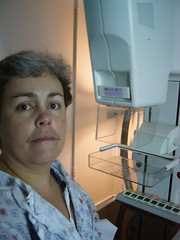
Yes, one of my appointments was for my yearly mammogram.  If you are a well-endowed woman like me, you know that getting your yearly mammogram can be quite uncomfortable.  I always get a little flare-up of my intercostal muscle pain afterwards (that's pain caused by your rib muscles.)  Plus the girls aren't too thrilled about getting squished like that either.  And I mean, they get really flattened...

But this year it was different too.

I discovered that UCLA is participating in a program called the Athena Breast Health Network.  The researchers believe that the key to breast health is in each woman's story and they are asking us to share our health stories with them so they can get closer to true prevention and a true cure for breast cancer.

First, I was given an iPad and asked to fill out a questionnaire that took about 15 minutes.  It probably wouldn't have taken so long if I knew how to use an iPad!  (Yeah, I'm one of those people who don't own or ever use one!)  I left my reading glasses with Robert and I didn't know you could zoom in and make the text bigger with your fingers.  I also could have really used a stylus to tap on the screen to more accurately select my answers.

They asked a lot of questions about the health history of my family and myself.  I don't have any female relatives that I know of who have ever had breast cancer, so perhaps that made the questionnaire easier to complete.  They did ask if anyone in my family had leukemia before the age of 40.  Now that was a red flag for me since I am Miss I Survived Leukemia at the age of 22.  So when I turned my iPad in, I asked the research assistant present if there was an emerging link between the two.  They said no.

I Googled it when I got home and found this article on Medscape: Risk of Second Malignant Neoplasms After Childhood Leukemia and Lymphoma. I am going to follow up with a question to my cancer suvivorship team at the UCLA Livestrong Survivorship Center for Excellence as well.

One of the questions that they asked on the questionnaire was whether you were willing to give the researchers a small sample of saliva or blood.  Of course I said yes.  So when I turned in my iPad I was given a 8 1/2 by 11 laminated sheet of paper to hold that I guess was to signal the staff of my choice.  I sat back down, listened to the utterances of lady next to me as she struggled with using her iPad to answer the questions and then looked around and noticed that I was the only one with that special piece of paper.

Huh?!? I thought to myself.  No one else volunteered to give a sample?

For a split second I almost regretted my decision.  Then I rationalized that, with my crazy medical history, I was probably not the ideal candidate for analysis.  I half expected that my sample might get thrown out based on those facts alone. But after those fleeting thoughts, I decided that since I said yes, I wasn't going to back out.  Especially since no one else appeared to be stepping up and joining me.

I got escorted back into the changing area and shown to a booth so I could get into a gown.  My instructions were to place the opening to the front.  This is, of course, my second least favorite part of getting a mammogram.  The gowns are always too small for my bosoms, so I inevitable have to wear two gowns, one opening in front and one over that opening to the back, to keep the girls covered so there isn't an accidental unveiling before I get to the mammography room.

As I stepped out of the booth, I was almost handed yet another one of those 8 1/2 by 11 special flyers.  I declined it, showing the nurse I already had one.  They must be super excited that I volunteered, I thought to myself.

"Come in here then and let's get your sample," she said with a smile.

Luckily for me, I only had to give a saliva sample.  Not that giving a blood sample would have been horrible.  Heck, I am giving blood samples to the lab at least four times a year and sometimes they are taking up to 6 tubes of blood at a time.  Giving saliva, in comparison, seems like a piece of cake.  In reality, between trying to keep my gown in place and coaxing my chronically dry mouth into producing enough saliva, the experience was a little gawky and ungraceful.  But I managed it.

I asked if they would test my sample for the breast cancer gene and was told no.  Apparently I won't be hearing about any results from the sample I just gave them.  But that's O.K.  I get the satisfaction of knowing I am helping advance medical science...IF they find my sample usable.  

Then it was on to the mammography room and the Selenia digital mammography machine.  It is strange that I find it a bit comforting that something that shares the spelling of my name takes the pictures?  The tech assisting me was the same one from last year.  I filled the awkwardness in the room with chat about how my husband and I bought an indoor electric turkey fryer and would be using it for the first time this Thanksgiving to prepare our bird.

Four views later, I left the room promising to let her know how the turkey turned out when I come back next year.

I headed back to the booth, changed out of the gowns, put my clothes on and headed out.  The whole visit took less than 30 minutes.

Sure, I'm always I little anxious about the results, but they come in the mail a few weeks later.  In the meantime, I'll put on my best Scarlett O'Hara face: I can't think about that right now. If I do, I'll go crazy. I'll think about that tomorrow.

The real difference this time is I got to walk away feeling like, in a very small way, I might be helping one of my 'sisters' prevent or beat breast cancer because I chose to participate in a research study.

I'm not the only one making a difference.  You can participate too!  Simply schedule your next mammogram at one of these participating University of California Medical Centers: UC Davis, UC Irvine, UCLA, UC San Diego or UC San Francisco.  Visit the Athena Breast Health Network website for more information.

Oh, and please consider volunteering to help medical research whenever you are presented an opportunity to do so.


Creative Commons License

Like this post? Then please...


Submit it to your favorite social sites.


Share it with PrintFriendly alternatives.

Print Friendly and PDF
Related Posts with Thumbnails

Sunday, November 14, 2010

Today is World Diabetes Day 2010

The blue circle symbol used to represent diabetes.Image via Wikipedia
Do you have diabetes?

It's a question YOU need to know the answer to so you can avoid short and long-term health complications. The incidence of diabetes is on the rise due to many factors, including diets full of high sugar foods, lack of exercise and obesity.

YOU may be at risk, you may even be having symptoms of the disease, and you may not know it.

The theme for World Diabetes Day 2010 is "Let's take control of diabetes." Diabetes is a manageable condition, controlled through diet, exercise and medications. Persons with diabetes can live long, healthy lives, but only if they know they have it and are educated by their health professionals on how to monitor and treat it.

The next time you are at your doctor's office, talk to them about diabetes. Ask what you can do to prevent getting diabetes.
Ask if you are at risk. Ask to be tested.


Photobucket

Photobucket

Photobucket


Creative Commons License
Enhanced by Zemanta


Creative Commons License

Like this post? Then please...


Submit it to your favorite social sites.


Share it with PrintFriendly alternatives.

Print Friendly and PDF
Related Posts with Thumbnails

Thursday, October 7, 2010

Why You NEED to Get Your Colonoscopy Too

Stomach colon rectum diagram.Image via Wikipedia
O.K., I'm doing this today. Yeah, I'm nervous about the whole thing, from the prep to the procedure. So I am using this post to remind myself and all of you why we need to get our colonoscopies.


  1. The older you get, the greater your chances of getting colon cancer. So once you turn 50, it's time to start screening. If you are at higher risk like me, you need to start sooner. Your doctor can advise you at what age you should begin.
  2. If everyone age 50 and older completed regular screenings, 60% of colon cancer deaths could be prevented. All I can say is, 'Wow!'
  3. If colon cancer is found at an early stage, treatment often leads to a cure. That's another 'Wow!' from me.
  4. Men, women and persons from all racial and ethnic groups are at risk for developing colon cancer. Sorry, but no one is getting a pass on this one.
  5. Colon cancer is the 3rd most common cancer in men and women and is the second leading cause of cancer-related deaths.
  6. People with colon cancer don't always have symptoms. In my mother's case, she didn't develop symptoms until after the cancer spread to her liver, making it very difficult to treat.
  7. Colon cancer screening save lives. Period.


For more information, visit the Center for Disease Control and Prevention's (CDC) colorectal (colon) cancer website for prevention, screening and fact sheets. This is where I learned the facts that I shared with you in this post.

Knowing that I can prevent colon cancer through screening gives me peace of mind. In fact, I am more worried about the actual procedure than whether or not I have colon cancer. That's because I feel confident that my doctor and I are doing all we can do to prevent me from getting colon cancer in the first place. And since I am going for early screening based on my risk factors, I feel confident that if there are problems, we will be catching them at an early, treatable stage.

Thanks to everyone who has left messages of support here, as well as on Facebook and Twitter. You all are helping me get over my anxieties about doing this for the first time. I really appreciate your support! Let me know when I can return the favor...

Creative Commons License
Enhanced by Zemanta


Creative Commons License

Like this post? Then please...


Submit it to your favorite social sites.


Share it with PrintFriendly alternatives.

Print Friendly and PDF
Related Posts with Thumbnails

Monday, March 29, 2010

Health Care Reform Won't Affect Me

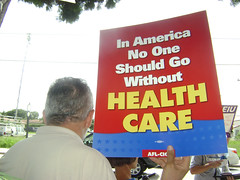
Health Care Rally for a Public Option in front...Image by leoncillo sabino via Flickr


I am not making this up. I actually went to the Washington Post website, entered in a bit of information about my current health coverage and was told that health care reform will not affect me. I admit I feel a bit disappointed.

After all, this is the legislation that inspired Vice President Biden's on-microphone gaffe, "This is a big f***ing deal."

To be fair, when Congress writes a bill purported to be as big as the novel War and Peace (which, by the way, had 1225 pages in the original edition and 1475 pages in the most recent reprint), it obviously is going to take some time to read all the provisions and even longer to figure out how to implement them. One sound bite I heard was that most of the provisions won't take effect until 2014. I know from experience that a lot can happen in four years.

Still, if health care reform is going to cost the US $1 trillion dollars (that's 12 zeros), I'd like to think that I am going to get some benefit from it. Then I realized that, as long as I am disable and receiving Medicare, I won't get any direct benefits from this legislation. More than that, I realized that anyone on Medicare, Medicaid or covered by employer-sponsored medical insurance won't get anything tangible. That includes the disabled, elderly, welfare recipients and those working adults and families receiving medical benefit from an employer.

This legislation supposedly helps people get medical insurance. It is supposed to provide subsidies to those who can not afford insurance. Has anyone mentioned yet how they are going to determine who gets subsidized and who doesn't? How much new paperwork and bureaucracy will be created to help make this determination? If it is anything like the process for qualifying for other public benefits, like disability or welfare, this is going to be a nightmare.

What does making health insurance mandatory mean for those who now must purchase insurance? I wonder if it just opens the door to medical care only to have it slammed shut again when the newly insured are overwhelmed by out-of-pocket expenses (co-pays, deductibles, co-insurance and out-of-network reduced coverage) they can not afford. So will the newly insured use their plan if they can not afford the associated out-of-pocket expenses?

Which brings me to the question, does medical insurance = health care?

Plus how many people are going to actively avoid getting insurance. After all, car insurance is mandatory for all drivers here in California and yet there are still uninsured drivers. Will there by a self-pay option that allows people to opt out of getting medical insurance?

For me, the biggest unanswered question is whether making for-profit health insurance coverage mandatory really the way to go here. I still think that health care needs to be non-profit, patient-centered and evidence-based. I believe that the money generated in health care system needs to be reinvested into things like medical research, practitioner continuing education, patient supportive services like social work and upgrades to medical equipment.

I fear that this heath care reform doesn't get to the heart of the matter. After all, having health insurance doesn't insure that people will be healthy. Personally, I'd rather see Congress invest $1 trillion dollars into improvements in agriculture and food production to make fresh, minimally-processed, healthy and nutritious foodstuffs affordable and available to everyone. With so many health care costs tied to what gets put onto the American dinner plate, it seems to me ensuring that everyone eats more healthfully would be a better way to spend my tax dollars than supporting the for-profit health insurance industry.

Which makes me wonder, did we just do this ass-backwards?

Yes, I am disappointed that health care reform won't affect me and seems to do nothing to make the health care system more accessible, effective, affordable, patient-friendly or efficient.

O.K., I've share my two cents, now it is time to tell me what you think. How can you let me know your opinion? By leaving me a comment of course!


Reblog this post [with Zemanta]


Creative Commons License

Like this post? Then please...


Submit it to your favorite social sites.


Share it with PrintFriendly alternatives.

Print Friendly and PDF
Related Posts with Thumbnails

Monday, October 5, 2009

It's Not the Bus You Need to Worry About

2000-2002 Ford E-350 photographed in Montreal,...Image via Wikipedia


Everyone jokes about getting hit by a bus tomorrow. I'm not sure how this phrase became synonymous with experiencing an unexpected tragedy, however I am reassured by The Explainer, Slate.com,
that the odds of this happening are very low. According to a footnote to an online article she wrote about health care titled The Explainer Gets Hit by a Bus:

According to the Department of Transportation, 10 pedestrians and bicyclists died in 2007 as a result of being run over by a cross-country or intercity bus in the United States. That's out of 5,400 people who were killed by vehicles of all types, including cars and trucks. (Not everyone who gets hit by a bus is killed, of course, and these numbers leave out all accidents involving municipal bus lines.)
So what should we really be worried about? Here are some statistics from the website Funny2.com, compiled from many sources by Howard Daughters, that sheds light on some of the things we should really be concerned about:

Chance of having a stroke: 1 in 6

Chance of dying from heart disease: 1 in 3

Chance of getting arthritis: 1 in 7

Chance of suffering from asthma or allergy diseases: 1 in 6

Chance of getting the flu this year: 1 in 10

Chance of American man developing cancer in his lifetime: 1 in 2

Chance of an American woman developing cancer in her lifetime: 1 in 3

Chance of a man getting prostate cancer: 1 in 6

Chance of a woman getting breast cancer: 1 in 9

Chance of getting colon / rectal cancer: 1 in 26


I mention these statistics not to be morbid or alarmist. I mention these statistics because I learned yesterday that my Internet friend who passed away suddenly on September 28 died from complications due to a massive stroke. A friend of the family shared this information with me and pointed out that she did have problems with high blood pressure and high cholesterol and was under a lot of stress from her job. It's hard to know if she was doing everything she could to address her health issues or if this stroke could have been prevented. I continue to be struck by the fact that she was only 49 years old at the time of her death, perhaps because I am currently in my mid-40s.

So you see, she didn't get hit by a bus and I probably won't ever be hit by a bus in my lifetime either. Her death is a wake-up call for me to start doing more about the things that might actually cause my death one day. Perhaps her death serves as a wake up call for all of us to do a better job of taking care of ourselves.


Reblog this post [with Zemanta]


Creative Commons License

Like this post? Then please...


Submit it to your favorite social sites.


Share it with PrintFriendly alternatives.

Print Friendly and PDF
Related Posts with Thumbnails

Friday, September 4, 2009

How Money-Driven Medicine Affects Me

Patient care technicianImage via Wikipedia


Dovetailing on my post from yesterday, I want to write a little bit about what parts of the documentary "Money-Driven Medicine" hit home for me.

Our health care system excels at what is termed "rescue care." So if you get cancer and need surgery, chemotherapy and/or radiation, be glad you live here in the U.S.A. Or if, God forbid, you need an organ transplant, you'll get an organ faster, have more skilled surgeons and have better aftercare here. If you need a complex cardiac procedure, you're in luck; some of the best cardiac surgeons are here too.

While all this expertise came in handy when I was diagnosed with leukemia in 1988, I currently feel extremely frustrated when trying to get the same kind of care and attention for my chronic illnesses: Hepatitis C, type 2 diabetes, fibromyalgia, dysautonomia and chronic fatigue. As a person living with chronic medical conditions, I am displeased, but not surprised, to hear that the American health care system ranks low on providing care to people like me. I already know that the current health care system isn't good at addressing chronic pain, helping people be in charge of their diabetes care, managing chronic infections like Hepatitis C or just simply taking the time to talk to a patient, giving them medical information and helping them make better health decisions.

I also find myself caught in the specialist shuffle. I've been referred to so many different specialists that I honestly have lost count of how many doctors I have seen. Once I get to their office, each one focuses on just one part of my body or one problem. So to the rheumatologist, I am just fibromyalgia, to the hepatologist I am just an infected liver, to the sleep specialist I am just sleep apnea; you get the picture. In the process, they lose sight of the whole me and forget about taking into account my multiple health problems which overlap and intersect and complicate my care.

As much as she want to be my quarterback, my primary care doctor relies on me to give her the reports and information I gather from all the specialists. But she simply doesn't have the time to synthesize all the information and translate it into a care plan. I am my own medical care manager, which concerns me because I am the one who doesn't have a medical degree.

When I first started my new life with chronic pain, the pain medicine doctors concentrated on my spine and wanted to do a whole bunch of injections: trigger point injections, cervical epidural injections, lumbar facet injections and radio frequency ablation. I decided to try the trigger point and cervical epidural injections, but they did not provide much relief. I finally told the doctors I had enough and stopped going to see them, because the only thing all these injections did was make me more fearful of having more injections.

Don't get me started about medial expenses. My husband works for a manufacturer of health care products and the company provides very good health insurance benefits. But with co-pays, deductibles and services not fully covered by insurance, we pay so much in out-of-pocket expenses, we qualify to deduct some of these expenses on our income tax returns. Since I qualified from Medicare in 2007, some of those cost are now covered, but now I struggle with getting providers to follow through and bill Medicare, which is my secondary insurance.

In my own case, I would welcome health care reform that addresses some of these issues:
  1. improvements to primary care, preventive care and the management of chronic illnesses.
  2. a more holistic approach to patient care.
  3. more collaboration and conferencing between medical specialties.
  4. more patient involvement in the discussion and informed choice of medical treatments.
  5. coverage for more services, especially for those with proven efficacy in helping patients.
  6. fewer out-of-pocket expenses and more efficiency in medical billing.


<span class=


Creative Commons License

Like this post? Then please...


Submit it to your favorite social sites.


Share it with PrintFriendly alternatives.

Print Friendly and PDF
Related Posts with Thumbnails

Thursday, September 3, 2009

No More Money-Driven Medicine

Rally: Health Care for ALLImage by ^Berd via Flickr

"No one should die because they do not have health care and no one should go broke because they get sick. If you agree, please post this as your status for the rest of the day."


This was the battle cry, spread from person to person, across Facebook today. If you haven't already, check your friends' status messages, you probably have at least one friend with this message already. If you agree, copy and paste into your status message. I did!

On Twitter? Here is a more friendly 140 character version for you to copy and paste:

No one should die from lack of health care or go broke because they get sick. If you agree RT & post as your status today.
Over the weekend I watched the documentary "Money-Driven Medicine" featured on Bill Moyers Journal on PBS. Based on the book of the same title by Maggie Mahar, the film gets to the root of the problem with America's health care system: money. She reveals the way health care is paid for is based on how much it costs the doctor to provide a service. So doctors like cardiologists, gastroenterologists and endocrinologists who provide more services, order more tests and perform more procedures get paid more money.

Simply put, the health care system isn't set up to reimburse doctors based on how much their services benefit the patient. So doctors in family medicine, internal medicine and generalists who practice preventative medicine and provide health education to patients get paid less for their services. As a result, fewer and fewer medical school graduates go into these fields. With fewer primary care doctors there are fewer appointments available, so more people, including those with insurance, are using the Emergency Room to obtain primary medical care.

Another problem focused on is the unnecessary spending and waste that is the hallmark of our current medical system. For example, with the abundance of MRI machines and the focus on making money by ordering tests for patients, it is commonplace for a patient to be sent for an MRI. Based on the results of those MRIs, more patients than ever are now being advised that they need surgery. Question is, is that surgery really necessary?

In addition, with the health care system ruled by making a profit, little of that profit is reinvested back into the health care system.


That's not to say that the doctors providing services don't care about their patients. According to Ms. Mahar, five out of six of the doctors she contacted while doing research for her book called her back and wanted to talk about their concerns about a health care system that disrespect patients and ties their hands to advocate for better quality of care. Featured in the documentary is Dr. Donald Berwick, a pediatrician and President and Chief Executive Officer of the Institute for Healthcare Improvement, who wants to overthrow the current health care system in favor of one that is more efficient, more respectful of patients and uses its resources more judiciously.

Please visit the Bill Moyers Journal PBS website where you can learn more by watching the program via video, listening to the podcast and or reading the transcript of the program. Decide for yourself if you'd like to join me in starting a revolution and ending Money-Driven Medicine.

Follow this link to Amazon.com to purchase the book Money-Driven Medicine:


Reblog this post [with Zemanta]


Creative Commons License

Like this post? Then please...


Submit it to your favorite social sites.


Share it with PrintFriendly alternatives.

Print Friendly and PDF
Related Posts with Thumbnails

Friday, August 14, 2009

Fulfillment Friday, a.k.a. The Results of Tomorrows Past

Destinies FulfilledImage via Wikipedia

Wow, Fulfillment Friday sneaked up on me this week. Seriously, did seven days go by already? I must have been busy or having fun, or both, to make the week fly by like it did ... or did I have a spectacular attack of fibro fog?

Here are my accomplishments from this past week:

  1. Researched how to create a freelance writer's resume (and considered that maybe I should be offering my services as a resume writer.)
  2. Completed my own freelance writer's resume.
  3. Turned my resume and three "clips" (i.e. published writing samples) into PDF documents.
  4. Submitted my new freelance writer's resume and clips to Jenni at ChronicBabe.com to apply for the "fibro-writer" position she advertised. Received a nice email today acknowledging that my submission was received. Now I need to be patient and let the universe work its magic.
  5. Harvested tomatoes, figs, green beans and radishes from my container garden.
  6. Helped out at Robert's parents' house, watering plants and doing other miscellaneous tasks. BONUS: The boys (my dogs) got to have fun running around in their backyard.
  7. Enjoyed Brunswick's graduation from the six week Advanced Training at PetsMart. Brunswick and I are a great team; we're almost ready to take the Canine Good Citizen (CGC) test.
  8. Checked off some of my Priority Health Maintenance Appointments Not to Be Missed: annual gynecological exam and annual mammogram. By the way, "the girls" are fine.
  9. Blogged every day.
  10. Participated in my first blog carnival, the 5th edition of Patients for a Moment. So exciting!
  11. Had some fun with Google search and discovered my blog is getting some mentions from others, like Wellsphere.com and the Worldwide Association for ME/CFS Awareness and Research. Very cool!
  12. Accomplished my goal of incorporating more rest into my day, which was very necessary given how busy I was this last week.
  13. Lucky number 13: Finished the book Middlesex by Jeffrey Eugenides.
Looking back on a week of tomorrows past, I am proud of my accomplishments. Moving into a new week, I will review the priorities I set last Saturday and renew my determination and commitment to get the things that got put on hold this past week done.

Here's to tomorrow!


Reblog this post [with Zemanta]


Creative Commons License

Like this post? Then please...


Submit it to your favorite social sites.


Share it with PrintFriendly alternatives.

Print Friendly and PDF
Related Posts with Thumbnails

Friday, July 17, 2009

My Routine: Priority Health Maintenance Appointments Not To Be Missed

day57 mammogramImage by ms.Tea via Flickr

PLEASE NOTE: I devote my post today to my high school classmates Megan Garvey and Petra Gemmingen. I found out yesterday that my classmates both passed away from breast cancer during the month of June 2009. May they rest in peace.

You could argue that I take more than my fair share of medical care and you might be right. There are, however, several routine health appointments that I keep that are vital to my health. I'm talking about my preventive health care appointments.


As someone who lives with chronic illness and has dealt with cancer at age 22, I can tell you with certainty that having health problems is not fun. That's why I have faithfully kept my appointments for annual gynecological check-ups as well as an annual routine physical to check for things like blood pressure problems, high cholesterol and other health concerns. Since turning 40, I promptly added an annual mammogram to this list.

I used to think that since I already had cancer in 1988, I probably wa
sn't going to get it again. Since I got connected with the UCLA Livestrong Survivorship Center of Excellence in 2007, I've learned that I have risk factors from my cancer treatment for secondary cancers, heart problems and other health concerns. Through my participation in ACOR's Long Term Cancer Survivors List, I've met several long term cancer survivors like myself who have multiple health problems as I do.

This past April Linda Zame, the founder of the ACOR Long Term Cancer Survivors List group, died from cancer. Her cancer however was not related to her treatment for Hodgkin's Disease in the 1970s at age 21. You see, she skipped her routine colonscopy and by the time she started having symptoms her cancer was diagnosed at stage 4. Always turning misfortune into a teachable moment, sh
e asked all of us in the group not to neglect getting our colonoscopies and encouraged participants to schedule the procedure as a birthday present to her. After talking to my doctor, I will add colonoscopy to the list at age 45.

The reason I will start my colon cancer screenings at 45 is because my mother died from colon cancer in 1999 at the age of 61. Like Linda, she skipped her routine colonoscopy at age 55 and was diagnosed with stage 4 colon cancer at age 60. She survived for 11 months after her diagnosis.

I know that many people avoid routine preventive health care for a variety of reasons. What they don't realize when they put off their appointments or pass them up all together is that they are giving up a chance for early disease detection. Early detection is the key to successful treatment of many health problems. Starting to treat early is important not just in the case of cancer, but for conditions like diabetes, heart disease, HIV/AIDS and many others. The longer you live with an undiagnosed health problem, the greater the potential for that condition to do damage to your body and often when damage is done it is irreversible. Click on the image to the right to learn more about the preventative health care guidelines that apply to you and your children.

So join me in honoring my classmates Megan and Petra. If you are a women 40 and over, I challenge you in the next week to schedule your annual mammogram if you haven't already. If you know a women over 40, encourage her to do the same. And if you are a man, please make an appointment for an annual routine physical in the next week. Most of all, do it for yourself and your health.


Reblog this post [with Zemanta]


Creative Commons License

Like this post? Then please...


Submit it to your favorite social sites.


Share it with PrintFriendly alternatives.

Print Friendly and PDF
Related Posts with Thumbnails