eader
Showing posts with label medical research. Show all posts

Wednesday, November 16, 2011

Beyond Pink Ribbons:
What I Did Yesterday To Prevent Breast Cancer

I went hardcore patient yesterday and scheduled an insane number of doctors appointment (two) and medical tests (two.)

Thank goodness my husband came with me all day long too and served as my chauffeur--a task he truly abhors--as well.  We got started at 10:30 a.m.; he was bright-eyed and bushy-tailed and me, well, not so much.  I was praying to get through the day with the insanely small amount of sleep I was able to catch the night before.  What a team we made!

I had no idea that during the course of the day I was going to be given a choice to make a real difference in the fight against breast cancer.

Yes, one of my appointments was for my yearly mammogram.  If you are a well-endowed woman like me, you know that getting your yearly mammogram can be quite uncomfortable.  I always get a little flare-up of my intercostal muscle pain afterwards (that's pain caused by your rib muscles.)  Plus the girls aren't too thrilled about getting squished like that either.  And I mean, they get really flattened...

But this year it was different too.

I discovered that UCLA is participating in a program called the Athena Breast Health Network.  The researchers believe that the key to breast health is in each woman's story and they are asking us to share our health stories with them so they can get closer to true prevention and a true cure for breast cancer.

First, I was given an iPad and asked to fill out a questionnaire that took about 15 minutes.  It probably wouldn't have taken so long if I knew how to use an iPad!  (Yeah, I'm one of those people who don't own or ever use one!)  I left my reading glasses with Robert and I didn't know you could zoom in and make the text bigger with your fingers.  I also could have really used a stylus to tap on the screen to more accurately select my answers.

They asked a lot of questions about the health history of my family and myself.  I don't have any female relatives that I know of who have ever had breast cancer, so perhaps that made the questionnaire easier to complete.  They did ask if anyone in my family had leukemia before the age of 40.  Now that was a red flag for me since I am Miss I Survived Leukemia at the age of 22.  So when I turned my iPad in, I asked the research assistant present if there was an emerging link between the two.  They said no.

I Googled it when I got home and found this article on Medscape: Risk of Second Malignant Neoplasms After Childhood Leukemia and Lymphoma. I am going to follow up with a question to my cancer suvivorship team at the UCLA Livestrong Survivorship Center for Excellence as well.

One of the questions that they asked on the questionnaire was whether you were willing to give the researchers a small sample of saliva or blood.  Of course I said yes.  So when I turned in my iPad I was given a 8 1/2 by 11 laminated sheet of paper to hold that I guess was to signal the staff of my choice.  I sat back down, listened to the utterances of lady next to me as she struggled with using her iPad to answer the questions and then looked around and noticed that I was the only one with that special piece of paper.

Huh?!? I thought to myself.  No one else volunteered to give a sample?

For a split second I almost regretted my decision.  Then I rationalized that, with my crazy medical history, I was probably not the ideal candidate for analysis.  I half expected that my sample might get thrown out based on those facts alone. But after those fleeting thoughts, I decided that since I said yes, I wasn't going to back out.  Especially since no one else appeared to be stepping up and joining me.

I got escorted back into the changing area and shown to a booth so I could get into a gown.  My instructions were to place the opening to the front.  This is, of course, my second least favorite part of getting a mammogram.  The gowns are always too small for my bosoms, so I inevitable have to wear two gowns, one opening in front and one over that opening to the back, to keep the girls covered so there isn't an accidental unveiling before I get to the mammography room.

As I stepped out of the booth, I was almost handed yet another one of those 8 1/2 by 11 special flyers.  I declined it, showing the nurse I already had one.  They must be super excited that I volunteered, I thought to myself.

"Come in here then and let's get your sample," she said with a smile.

Luckily for me, I only had to give a saliva sample.  Not that giving a blood sample would have been horrible.  Heck, I am giving blood samples to the lab at least four times a year and sometimes they are taking up to 6 tubes of blood at a time.  Giving saliva, in comparison, seems like a piece of cake.  In reality, between trying to keep my gown in place and coaxing my chronically dry mouth into producing enough saliva, the experience was a little gawky and ungraceful.  But I managed it.

I asked if they would test my sample for the breast cancer gene and was told no.  Apparently I won't be hearing about any results from the sample I just gave them.  But that's O.K.  I get the satisfaction of knowing I am helping advance medical science...IF they find my sample usable.  

Then it was on to the mammography room and the Selenia digital mammography machine.  It is strange that I find it a bit comforting that something that shares the spelling of my name takes the pictures?  The tech assisting me was the same one from last year.  I filled the awkwardness in the room with chat about how my husband and I bought an indoor electric turkey fryer and would be using it for the first time this Thanksgiving to prepare our bird.

Four views later, I left the room promising to let her know how the turkey turned out when I come back next year.

I headed back to the booth, changed out of the gowns, put my clothes on and headed out.  The whole visit took less than 30 minutes.

Sure, I'm always I little anxious about the results, but they come in the mail a few weeks later.  In the meantime, I'll put on my best Scarlett O'Hara face: I can't think about that right now. If I do, I'll go crazy. I'll think about that tomorrow.

The real difference this time is I got to walk away feeling like, in a very small way, I might be helping one of my 'sisters' prevent or beat breast cancer because I chose to participate in a research study.

I'm not the only one making a difference.  You can participate too!  Simply schedule your next mammogram at one of these participating University of California Medical Centers: UC Davis, UC Irvine, UCLA, UC San Diego or UC San Francisco.  Visit the Athena Breast Health Network website for more information.

Oh, and please consider volunteering to help medical research whenever you are presented an opportunity to do so.


Creative Commons License

Like this post? Then please...


Submit it to your favorite social sites.


Share it with PrintFriendly alternatives.

Print Friendly and PDF
Related Posts with Thumbnails

Thursday, May 12, 2011

Thoughts About Where We Are on Fibromylagia Awareness Day 2011


I recently Googled "Why do we have awareness days?" and got page after page of search results on all kinds of different awareness days.

One person said they had a calendar that featured at least one awareness event for each day of the year. Now that seems like quite a lot of causes to keep track of every year. Another person suggested that an awareness day should be: a day of action...that will focus on grass-roots activism organized by local activists. I'm not exactly sure what that means, but that sounds like a lot of action.

Truth is, besides writing this post, I'm not sure what I am supposed to be doing today on Fibromyalgia Awareness Day 2011.

With three FDA approved drugs and a whole series of drug company commercial talking about fibromyalgia, I have to question whether we need a day to make everyone aware that fibromylagia exists. Yeah, I know the point of those commercials was to sell drugs, but I think they also increased awareness and legitimized fibromyalgia. Which I guess lends credibility to the saying, "All publicity is good publicity."

Because of these drug discoveries, it seems inconceivable to me that someone in the medical profession would deny the existence of fibromylagia when there are three drugs they can prescribe to attempt to treat it.

While three drugs are a start, these drugs aren't a cure. More research and development is needed to uncover more treatments. I've read that only 30% of people living with fibromyalgia response positively to the medications used to treat it. Clearly there is more work to be done in this area.

Pinpointing what triggers fibromyalgia would help treatments advance too, not to mention lead to prevention strategies so that no one else needed to suffer daily chronic pain and fatigue.

Plus I know there is more education that needs to happen about what fibromyalgia truly is. There is emerging evidence that fibromyalgia is a brain disorder. That is why drugs like Lyrica, Cymbalta and Savella, which have an effect on the brain and nervous system, seem to help some people with fibromyalgia. Which makes me wonder if the treatment of fibromyalgia will eventually transition from rheumatologists to neurologists.

By the way, knowing that fibromyalgia is a brain disorder helps us understand why it is so difficult to treat. I've heard medical professionals say that neurological conditions present some of the biggest challenges in medicine today. Having spent time at the neurology clinic, both for myself and with my dad who had Alzheimer's disease, I have first-hand knowledge of this fact. The brain remains the last unconquered frontier in medicine. Not only is it still unclear all the things the brain does, there currently are no treatments for restoring brain function to normal once it has been altered or destroyed by illness or disease.

So I think that fibromyalgia awareness today is less about shouting "This illness is real!" and more about educating people that there is still a long way to go to successfully treat this syndrome. It is about continuing to put pressure on all the entities that fund and conduct research on fibromyalgia to keep pursuing with their efforts. I guess this also means that our cause must find a way to wrangle more resources to fund these efforts so that they produce greater results. This seems like quite a formidable task, given that there are at least 364 other worthy causes filling the calendar each and every year vying for the same limited pot of resources to make a difference for their causes too.

Which leads me to my final thought: Fibromyalgia Awareness Day is about hope. Hope that in some research lab somewhere there is a happy accident that results in the discovery of new knowledge and/or new treatments that foster better outcomes for people living with fibromyalgia today. Until that happens, I hope that someone uncovers something honest and real that can truly increase the quality of our lives while we are waiting for our medical miracle. Ultimately, I hope that people with fibromyalgia can one day regain their fullest potential, enjoy life completely and leave chronic illness behind.

I think today I am going to allow myself to daydream about that day in the future when Fibromyalgia Awareness Day is no longer on the calendar.

I'll be back tomorrow with my weekly Mission 2011 post.


Creative Commons License

Like this post? Then please...


Submit it to your favorite social sites.


Share it with PrintFriendly alternatives.

Print Friendly and PDF
Related Posts with Thumbnails

Tuesday, December 21, 2010

WE FEEL: Fibromyalgia Is a Burden

Pain by artist007
We really need more research on the impact fibromyalgia has on a person living with it.

So when I learned about the WE FEEL survey (Women Expressing Fibromyalgia's Effects on their Everyday Lives), I knew I needed to share an overview of the results here as well as spread the word about this study on Twitter.

While the results certainly don't surprise me, I think it is important for health care providers, family member and friends to read these results.

  • For many, life with fibromyalgia is burden of moderate to severe symptoms that interfere with quality of life
  • Many patients feel their symptoms are not taken seriously
  • Many patients suffer for years before they get a fibromyalgia diagnosis
  • An early diagnosis can often mean a better outcome
  • Having fibromyalgia makes it difficult to do things like household chores or work outside the home
  • Persons with fibromyalgia enjoy less quality time with family and friends
  • Positive social support and adequate coping resources are often limited
  • A combination of medical treatment and social support was found to be helpful in decreasing fibromyalgia symptoms and increasing the ability to manage day-to-day life
I also found the following results about treatment modalities interesting as well.
  • Four in ten patients (42%) who take prescription medication said that their drug therapy was successful in improving fibromyalgia symptoms
  • Exercise (46%) and alternative therapies (43%) like massage, meditation, and chiropractic care were identified as treatments that improved fibromyalgia symptoms
  • Just over half of the respondents (51%) said that lifestyle changes helped improve fibromyalgia symptoms
  • Those participants who reported receiving more support from their spouse (56%) and/or children (61%) also reported more positive benefits from treatment
The take-away message for me is that people living with fibromyalgia need more support from medical providers, family and friends. Better drug therapies that do an improved job of targeting symptoms are needed. Health insurance needs to cover proven alternative therapies and occupational therapy programs that teach lifestyle changes so that patients have a chance to obtain better symptom management.

Creative Commons License
Enhanced by Zemanta


Creative Commons License

Like this post? Then please...


Submit it to your favorite social sites.


Share it with PrintFriendly alternatives.

Print Friendly and PDF
Related Posts with Thumbnails

Thursday, April 22, 2010

Vote to Change How Cancer Is Treated

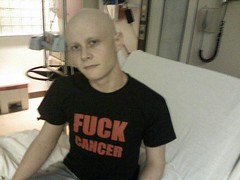
Fuck cancerImage by hoodiefanatic via Flickr


Yesterday I was checking my Facebook feed when I saw this post from a friend:

Develop an alternative cancer treatment that has no side effects | Pepsi Refresh Everything
www.refresheverything.com
Vote for the most refreshing ideas to win Pepsi Refresh Project grants for Health

Being a 22 year cancer survivor, of course I had to check this out.

Because I have lived so long after my leukemia diagnosis in 1988, I know first hand that surviving cancer is really just half the battle. Think about it like this: having cancer is like climbing Mount Everest. It is a grueling struggle to get to the top of the mountain, which is akin to cancer treatment. Once you get to the top, the view is exhilarating and awe-inspiring, like finding out your cancer is in remission. But then, you have to make it all the way back down the mountain, which is just as treacherous and dangerous as getting to the top. The journey back down the mountain describes life for many cancer survivors who are living with late and long term effects from their cancer treatment.

So what are cancer treatment late and long term effects? In my case, the chemotherapy drugs I received damaged my autonomic nervous system, caused infertility and put me at risk for getting leukemia again and having heart problems. In addition, the numerous blood transfusions I received in 1988 gave me Hepatitis C. The Children's Oncology Group has put together a comprehensive list of cancer treatment late and long term effects based on the type of cancer and the treatment received, which you can read by clicking here: Long-Term Follow-Up Guidelines for Survivors of Childhood, Adolescent, and Young Adult Cancers.

But let's be honest. The odds of me surviving my cancer were only 33% in 1988. It is a miracle I am still alive. Back then, getting the upper hand on cancer was the goal of treatment and no one really worried about late and long term effects because so few people lived for decades past their cancer diagnosis.

I am a member of the first generation of cancer survivors who beat cancer and are here to tell you about it.

Now that treating and curing cancer is a more achievable goal, I say it is time to work on eliminating cancer treatment late and long term effects. I want to make sure that the next generation of cancer survivors does not have to live with this double edged sword illness of illness and disability from cancer and cancer treatments. So when I found this opportunity for all of you to help me achieve this goal, well, you know I had to write about it.

The Kanzius Cancer Research Foundation is working to develop a non-invasive cancer treatment that kills cancer cells and spares healthy cells. Based on the work of John Kanzius, radio wave technology has been found to be effective in targeting and destroying pancreatic, liver, breast, prostate, colon, lung and leukemic cancers. The foundation anticipates FDA approval this year to build a larger device capable of treating humans and beginning pre-clinical testing. Based on this time line, they anticipate beginning Phase 1 human clinical trials in 2012.

Your vote at the Pepsi Refresh Project can help the Kanzius Cancer Research Foundation obtain $250,000 in needed funding. With the money, the foundation plans to hire two full-time experts, a molecular biologist and a physicist, to support ongoing research and clinical trials. They will also use the funds to support ongoing global fundraising efforts to support their ongoing research.

Please help me improve the health of cancer survivors by voting for the Kanzius Cancer Research Foundation at the Pepsi Refresh Project. You can cast your vote daily through April 30th. The foundation needs to place 1st or 2nd in its funding category in order to receive funds and it is currently in 3rd place. Let's help them move up in the rankings and achieve their goal!


Reblog this post [with Zemanta]


Creative Commons License

Like this post? Then please...


Submit it to your favorite social sites.


Share it with PrintFriendly alternatives.

Print Friendly and PDF
Related Posts with Thumbnails

Saturday, October 24, 2009

A Comment from the HCV Advocate


I told you that the HCV Advocate is my most trusted source for information about Hepatitis C and here are a few more reasons why.  In response to my post Dear HCV Advocate, I received a comment from their webmaster that I am paraphrasing below:

Hi Selena,
Hang in there!
Just to clarify, we obtain a lot of information from in-person Hepatitis C and liver disease conferences that we attend and some of the research presented is still in progress and not yet at its completion.
We do have lots of abstracts and articles at the HCV Advocate website, as you know, from very well established authorities in the field. 
Unfortunately, a lot of doctors are so busy they can't keep up with the research as we are able to do.
I so appreciated this comment; I am also not surprised by its content.  I wrote another recent post where I mentioned that medicine was both an art and a science and questioned what happened to the practice of the art of health care.  Apparently, I needed to question the science side of health care as well.  

All health care professionals, including physicians, are mandated to complete continuing education courses.  This requirement can be met by attending conferences.  It is apparent that the HCV Advocate is paying close attention to the information being presented at these conferences and posting summaries of the latest findings on their website.  It is also clear that the HCV Advocate is reading the articles being published in liver-related medical journals.  

I have to wonder why the hepatologists I have seen, some of whom I know attend these same conferences and read these same journals, aren't coming away with the same information.  Today everyone is too busy to get to all the things on their plate; knowing that doctors aren't keeping up with medical research findings and their related implications for clinical practice really makes me nervous.  Can I really be more educated about Hepatitis C than my doctors?  

That thought is downright scary...

 
Reblog this post [with Zemanta]


Creative Commons License

Like this post? Then please...


Submit it to your favorite social sites.


Share it with PrintFriendly alternatives.

Print Friendly and PDF
Related Posts with Thumbnails

Sunday, May 17, 2009

Getting the Rx Cure: It's a Numbers Game


Maybe it's a sign of how far science and medicine have come. Today, there are a lot of treatments for medical conditions. So when someone we know or love is diagnosed with a condition that has no cure or treatment or baffles doctors we wonder, "Well, why don't they know how to treat that?"

It's a legitimate question, one I've even asked myself. The problem is the assumptions behind the question:
  1. that medicine knows everything there is to know about the human body and how it works
  2. that medicine knows everything there is to know about all disease causing entities---bacterial, viral, fungal, prion, genetic, etc.---and how they work
I know that, despite how doctors may talk and act, they don't know everything.

For some really complex systems in the body, like the brain and nervous system, what is known is dwarfed by what is not known. For some diseases, like HIV/AIDS and Alzheimer's, even if there was a cure tomorrow, there is no technology to repair the damage to the human body that these conditions inflict as part of the disease process; there is no way to repair a damaged immune system lacking T-cells or a brain full of amyloid plaques and neurofibrillary tangles.

Then there is the process of how medical discoveries are made. Among the many steps, somewhere near the beginning of the process a medical researcher must step forward and identify a problem or issue to explore, usually something that holds their interest, sustains their curiosity, drives them to find answers and fuels a willingness to "jump through the hoops" of the research process. Next are the dual issues of money and need. The medical researcher needs money to conduct their research and, at a very basic human needs level, they need to bring home a paycheck. Part of the process to acquire money is to prove need: how many people are affected by the condition that is being researched and how dire is their situation. Somewhere someone is thinking about the "big picture" and the "payoff" too, i.e. what is the probably outcome of the research---a medication, a surgery, a procedure---and how much money will it generate.

It's a lot of hurdles to jump through just to get the research started.

Once the problem is identified, need established and funding secured the science can begin. Scientific discovery is a lot like life: the more risks you take the more you get in return. In the long run, it has lead to all the treatments we rely on today. In the short run, it means a lot of trial and error and a lot of money, time, energy and resources wasted.

I know a little bit about all of this first hand as I have been following the progress of potential antiviral treatments for Hepatitis C (HCV). I began in earnest following the HCV drugs in the research pipeline in 2005, when it was suggested to me that my fibromyalgia symptoms might be related to my chronic HCV infection and I needed to consider treating the HCV. I have been waiting for the antiviral drugs in the pipeline to make it out of clinical trials and into the pharmacy.

Periodically I log onto the HCV Advocate website and the webpage Hepatitis C Treatments in Current Clinical Development. I have cut and pasted from this webpage because I think the graphical view of this table alone paints a picture of the road to medical discovery. Take a look at the columns below. Phase I is right out of the test tube and Phase IV is in the pharmacy, ready to prescribe:


Phase I Phase II Phase III Phase IV
HCV/MF59 Oral Interferon alpha Viramidine Infergen/
Consensus
Bavituximab (Tarvacin) Civacir Albuferon Nexavar
IL-29 (Type III Interferon) Omega Interferon ZADAXIN® (thymalfasin or thymosin alpha 1)


NOV-205 PF-03491390 (formerly IDN-6556) VX 950 (telaprevir)


ITMN-191 IC41 SCH 503034 (boceprevir)


Belerofon (oral) MX-3253 (Celgosivir) Eltrombopag


R7128 DEBIO-025


A-831 GV1001


PeviPROTM PI-88


TG4040 BLX-883 (Locteron)


ChronVac-R MitoQ


IMO-2125 SOV-07


LGD-4665 Alinia (nitazoxanide)


CF102 VCH-759


VCH-916 Oglufanide disodium


VX-500 TMC435350


PF-00868554 GGI-5005 (Tarmogen)


SPC3649 (LNA-antimiRTM-122) CTS-1027


ABT-333 SCV-07


ANA598 SCH900518 (518)


IDX184 BMS-790052


CYT107 ITX5061


PHX1766 A-832

VX-813 GS 9190

ANA773 Oral Interferon

BI 201335 CF102

SCY-635 GS9450

ABT-450 HCV


PSI-7851


So as of May 7, 2009:
  • 29 drugs in Phase 1
  • 27 drugs in Phase 2
  • 6 drugs in Phase 3
  • 2 drugs in Phase 4 (in addition to the "standard" treatment of Pegylated interferon and Ribavirin)
  • 41 additional drugs made it to human clinical trials but those studies have been canceled (not shown in table above).
As you can see, medical research starts with lots of promising ideas, but the closer you get to the finish line (Phase IV), the list gets smaller and smaller.

It seems to me that it's all a numbers game:
  • how many researchers are interested in finding out more about a certain medical condition and possible treatments
  • how many people have this condition
  • how much money will it take to develop a treatment
  • how many treatments will be tried before they find the one(s) that work
  • how much money can be made from a successful medication once it reaches the pharmacy
I know that the way this process works leaves some medical conditions with less attention, less funding and less hope for patients. I have a very goood friend who has been diagnosed with LAM, or lymphangioleiomyomatosis (lim-FAN-je-o-LI-o-MI-o-ma-TO-sis) which is a rare and fatal lung disease affecting women in their 30s and 40s. LAM affects about 10,000 women in the United States and very little money goes to research for treatments that can help prolong the current prognosis of 10 to 20 years from diagnosis.

My discussion of this topic is not meant as an endorsement of the way medical research decisions are made. Rather it is food for thought, because if there is going to be health care reform it will affect medical research funding. If you only have so much money to pay for health care, then how do you decide what to pay for? How much goes to medical research? How do you decided which conditions to focus on? How do you play the Rx cure numbers game?


Creative Commons License

Like this post? Then please...


Submit it to your favorite social sites.


Share it with PrintFriendly alternatives.

Print Friendly and PDF
Related Posts with Thumbnails